Hoi An is one of the easiest places in Vietnam to misunderstand in a school trip itinerary. It is visually memorable, manageable for groups, and immediately appealing to students. That can make it tempting to treat Hoi An as a soft cultural stop: a walk through the Ancient Town, a lantern workshop, a short boat ride, and a relaxed evening before the program moves on.
Those elements can work, but they are not the real reason Hoi An deserves a place in a field-based school program. The stronger value is that several complex systems sit unusually close together. Within a short distance, students can encounter heritage conservation, mass tourism, craft economies, food culture, community tourism, coastal environments, flood risk, and the pressures of keeping a living town balanced while it also functions as a global visitor destination.
For schools comparing Vietnam school trips, Hoi An is useful not because it is simple, but because it makes complexity visible in a compact and relatively manageable setting.
Why Hoi An works for school trips
The first advantage of Hoi An is proximity. In some destinations, a school group has to travel far between a historical site, a craft setting, a market, a coastal environment, and a local community project. In Hoi An, these layers sit close enough for students to connect them within one or two days.
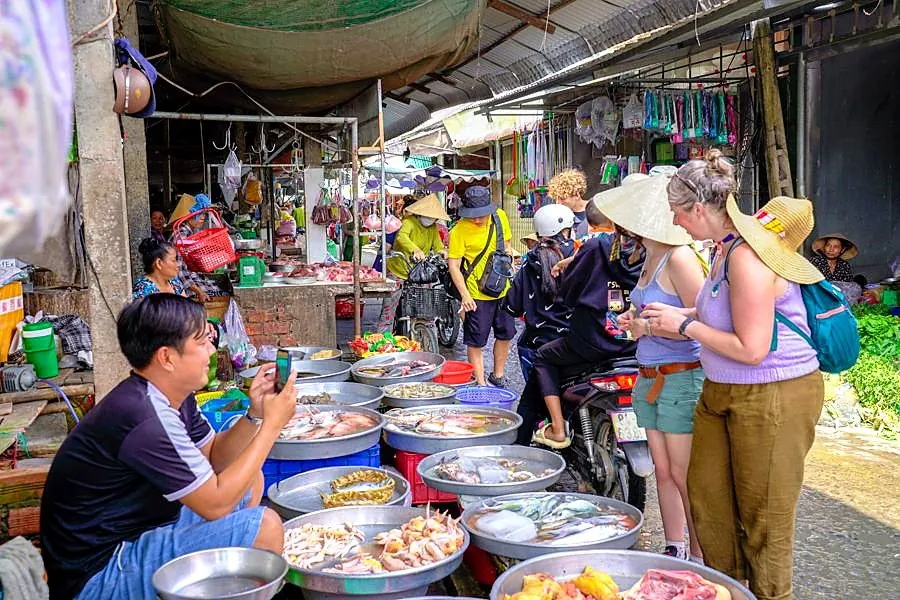
This matters educationally. Students can begin with the Ancient Town, then move into markets, foodways, craft villages, riverside environments, beaches, and nearby community settings without losing the thread of the program. The destination becomes easier to read because the distances are short and the contrasts are immediate.
That compactness also helps with supervision and pacing. Hoi An can give students enough variation without forcing the itinerary into constant long transfers. For middle school and high school groups, this is not a small detail. Better pacing usually means better attention, safer movement, and more useful debriefs.
Heritage and conservation in a living town
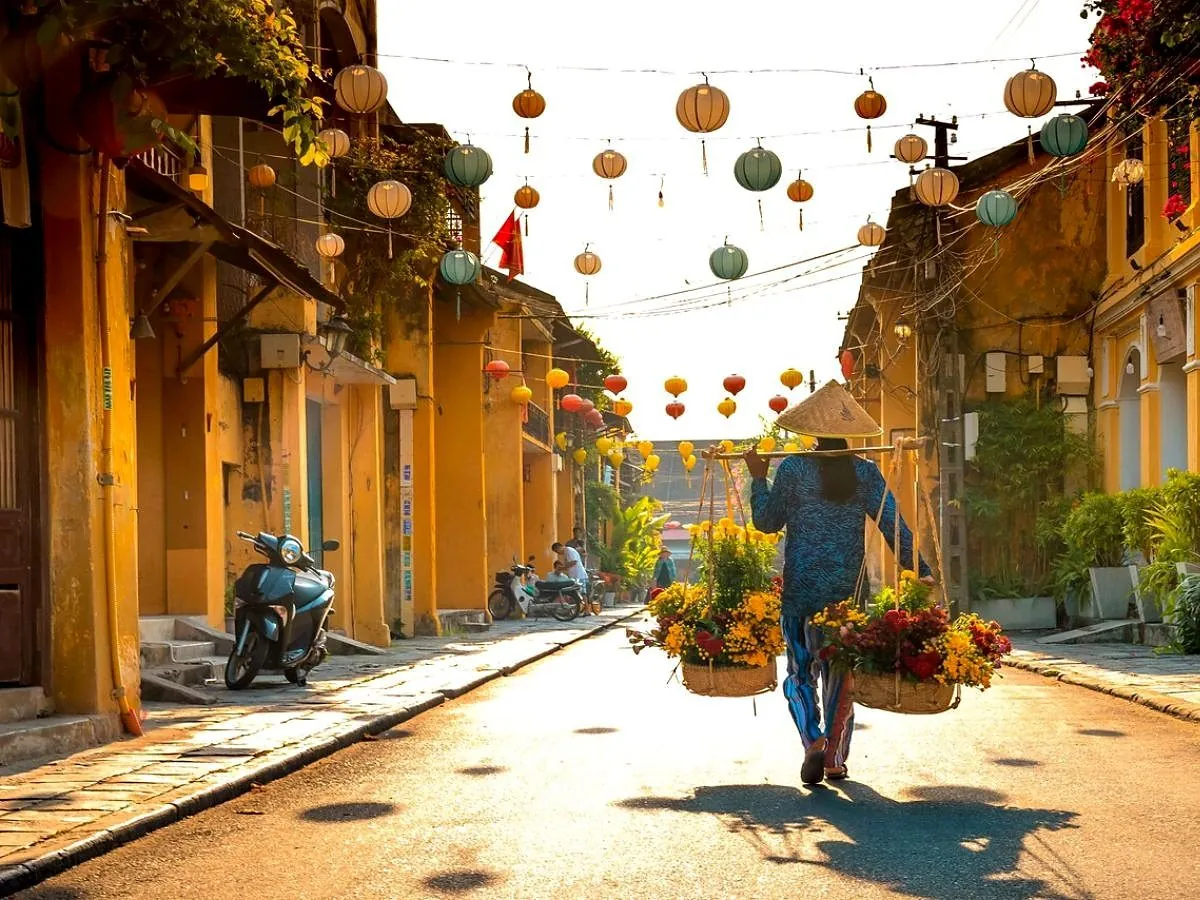
Hoi An is often introduced through its preserved architecture and old trading-port identity. For students, the better question is not only what has been preserved, but how preservation works in a place that is still inhabited, commercial, and heavily visited.
A walk through the Ancient Town can raise practical questions about conservation. Which parts of the town are protected? Which parts have been adapted for tourism? What feels like everyday life, and what feels staged for visitors? How does a place maintain visual continuity while its economy changes around tourism?
This makes Hoi An a useful site for studying cultural conservation as a living process rather than a fixed museum display. Students can see heritage as something managed, negotiated, marketed, repaired, regulated, and sometimes simplified for visitor consumption.
Hoi An also gives school groups access to a less common historical layer in Southeast Asia school travel: medieval and early modern trade, port cities, merchant networks, and cultural exchange before the modern nation-state frame takes over. This can be especially valuable for programs that do not want Vietnam to be understood only through the war, colonial history, or contemporary development.
Mass tourism and local life side by side
Hoi An is not a quiet untouched town. That is exactly why it can be educationally useful. Students can see mass tourism, heritage branding, local livelihoods, and more careful community-based or sustainability-oriented activities operating in the same small area.
This coexistence is the real field material. Hoi An shows how a destination can benefit from tourism and be pressured by it at the same time. Shops, workshops, cafes, markets, accommodation, transport, photography, river activities, and evening crowds all become part of the same question: how does a town manage success without losing what made it valuable in the first place?
For students studying geography, economics, global studies, tourism, or cultural change, Hoi An can make abstract questions more concrete. Tourism is not presented as simply good or bad. It becomes a system with trade-offs, incentives, dependencies, and visible consequences.
Activities that can carry learning value
Many common Hoi An activities can be worthwhile for school groups, but only if they are framed properly. A cooking class, for example, should not only be treated as a fun cultural activity. It can open questions about ingredients, markets, household knowledge, regional foodways, agriculture, and how Vietnamese cuisine is taught to outsiders.
Lantern-making can work in a similar way. If it is only a souvenir activity, the learning value is thin. If students are asked to think about craft, tourism economies, cultural production, and the difference between local practice and visitor-facing performance, the activity becomes more useful.
Nearby field settings can add further depth. Depending on the program, a school group might include Thanh Ha pottery, Kim Bong carpentry, Tra Que vegetable village, market observation, beach and coastal activities, kayaking with environmental clean-up, or community engagement with local initiatives. These should not be added simply because they are available. They should answer a program question.
A stronger Hoi An program usually gives students a task before the activity and time to interpret it afterward. What are they observing? What system are they trying to understand? What changed in their interpretation after speaking with someone, making something, cooking something, or moving through a local setting?
Where Hoi An can fall flat
Hoi An can also become weak very quickly. Some of the most popular experiences are memorable but not automatically educational. An evening walk through the Ancient Town, a boat ride, photo moments by the river, or a lantern-lit street can be exciting for students, but those moments do not carry much learning value by themselves.
This does not mean they should be removed. School trips still need moments of enjoyment, shared memory, and emotional texture. The problem is overclaiming. If a program describes every tourist-facing activity as deep cultural immersion, the language becomes less credible and teachers can feel the gap between the itinerary and the reality.
Hoi An works better when the program is honest about what each activity is doing. Some moments are there for orientation and atmosphere. Some are there for observation. Some are there for community engagement. Some are there for recovery and pacing. The learning improves when these purposes are not blurred.
Climate, flooding, and risk management
Hoi An is also a useful place to discuss risk. The town is vulnerable to weather, flooding, coastal pressure, and seasonal disruption. For school groups, this matters in two ways: as academic content and as operational planning.
Academically, students can ask how a heritage town manages climate and disaster risk while continuing to depend on tourism. They can look at rivers, low-lying urban space, weather patterns, coastal environments, and the practical limits of preservation when the physical environment is changing.
Operationally, Hoi An reminds schools that beautiful destinations still require planning discipline. Weather, heat, crowding, road movement, water-based activities, and backup plans all affect how a program runs. This is why Hoi An should be considered alongside a school’s wider safety and duty-of-care planning, not treated as a low-risk leisure stop simply because it feels relaxed.
How Hoi An fits into a Vietnam school trip itinerary
Hoi An usually works best with at least two days. One day can focus on the Ancient Town, heritage, food, craft, and guided observation. A second day can move into the surrounding areas: craft villages, farming contexts, coastal environments, community projects, or environmental activities.
In many programs, Hoi An is paired with Da Nang because of flight access. Da Nang makes arrival and departure easier, while Hoi An provides the stronger field-learning environment. Hue can also be added as a two-to-four-day extension when the program wants more depth around imperial history, religion, war memory, and Central Vietnam’s layered past.
In a 10-day Vietnam school trip itinerary, Hoi An can also serve as a pacing midpoint. After the density of Hanoi, it gives students a slower and more walkable setting. Before Ho Chi Minh City or the Mekong Delta, it can help students shift from historical and urban observation into questions about livelihoods, tourism, environment, and community life.
Planning a school trip to Hoi An
Hoi An should not be added to a school trip only because it is famous. It should be included when the program can use the destination properly: as a compact field environment where students can examine heritage, tourism, craft, food, community life, and risk in relation to each other.
For younger students, that may mean accessible observation tasks, practical workshops, food culture, and carefully paced community interaction. For older high school or university groups, Hoi An can support more complex inquiry into cultural conservation, tourism economies, climate vulnerability, urban management, and the way historical identity is maintained under commercial pressure.
The strongest school trips to Hoi An do not try to turn every activity into a major academic lesson. They use the right activities for the right purpose, protect pacing, and give students enough structure to notice the systems around them.