
Educational travel in Vietnam can take very different forms depending on the group.
This page is designed as a starting point — to help schools, universities, and learning-focused groups understand how programs are typically structured, and where different types of travel tend to lead.
Start with the type of program you are trying to build
Educational travel is too broad to plan from one template. A high school trip, a faculty-led course, and an alumni or group program may use some of the same places, but they need different pacing, support, framing, and outcomes.
High school trips
For schools planning student programs with clear supervision, pacing, curriculum links, and field-based learning in Vietnam.
Faculty-led programs
For universities and faculty members using Vietnam as a field setting for a course, theme, or academic line of inquiry.
Alumni and group travel
For learning-focused groups that want Vietnam to be interpreted with context, access, and local coordination rather than treated as a standard tour.
Service learning
For schools looking at community-based engagement, reflection, and longer-term local relationships in Vietnam.
How Vietnam works as a field-learning context
Educational travel in Vietnam works differently from more controlled destinations. The country presents layered environments — dense cities, historical memory, informal economies, religious spaces, and rapid development — that are difficult to simplify but highly valuable to learn from.
The challenge is not access. It is structure. Without careful design, students can move through Vietnam without understanding much. With the right structure, the same environments become powerful learning contexts rather than background scenery.
Used by: High schools, universities, and faculty-led groups
Main directions: History, culture, urban systems, development, community-based learning
Main challenge: Turning exposure into actual learning
Best use: Groups that want learning grounded in place
Effective educational travel in Vietnam usually includes
- Learning grounded in real environments rather than only guided visits
- Exposure to systems, not just sites
- Structured observation and reflection
- Teacher or faculty leadership that gives context to the field
- Enough time in place for students to process what they are seeing
- Guidance without over-controlling every moment
Types of educational travel programs in Vietnam
The same destination can support several kinds of programs. The main decision is not only where to go, but which audience the program is being built for.
School trips
Structured programs designed for middle and high school students, with stronger emphasis on pacing, support, and group coherence.
Faculty-led programs
University programs built around academic themes, courses, or lines of inquiry that use the field directly.
Service learning
Programs that combine structured learning with more deliberate forms of local engagement and reflection.
Interdisciplinary programs
Programs that combine multiple fields such as history, economics, urban studies, religion, development, or geography.
For school-specific programs, you can see how these are adapted in our high school trips in Vietnam.
For broader school travel structures across different themes and routes, you can also explore our Vietnam school trips.
If you are specifically looking at engagement-based formats, you can also explore our service learning programs in Vietnam.
What educational travel in Vietnam actually gives students access to
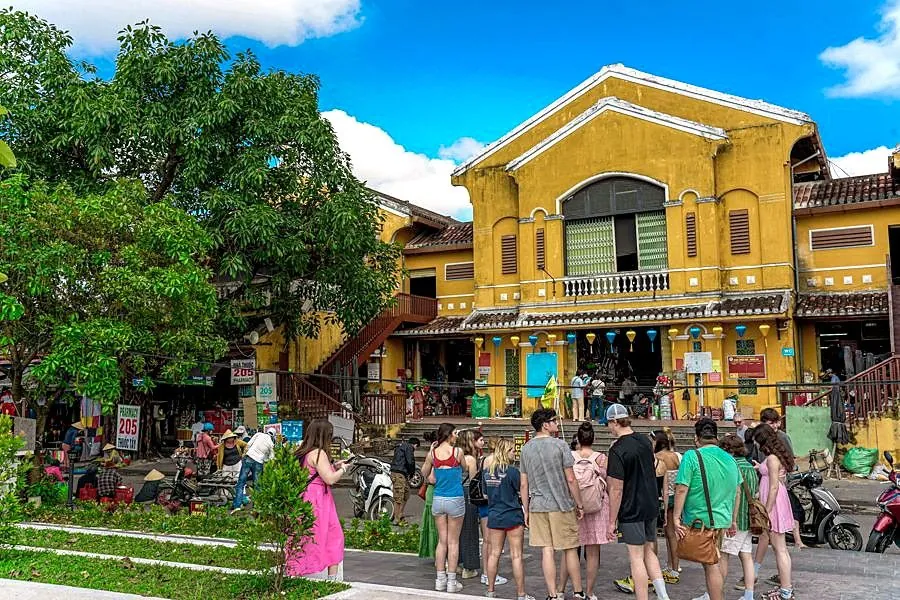
Urban environments
Cities in Vietnam allow students to read movement, commerce, infrastructure, public space, and social life as working systems.
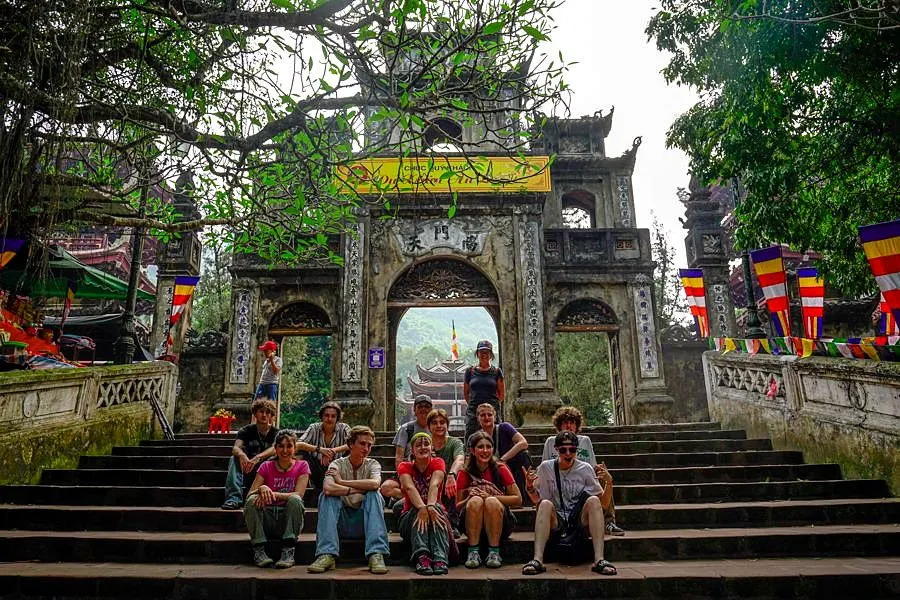
Historical context
Students encounter places where war, memory, state-building, and public narrative remain physically and socially present.
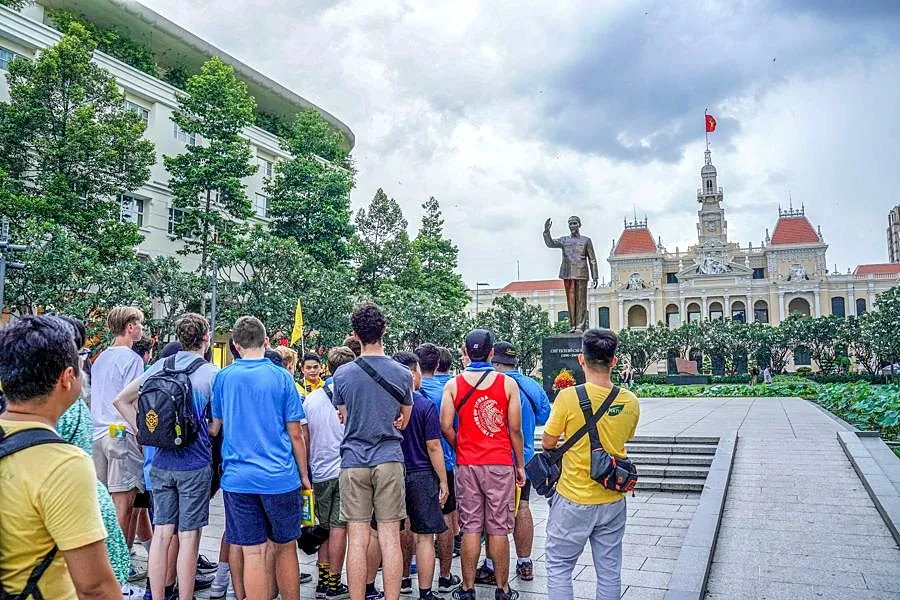
Local context
Educational travel becomes more useful when students spend enough time in a place to move beyond first impressions and into actual observation.
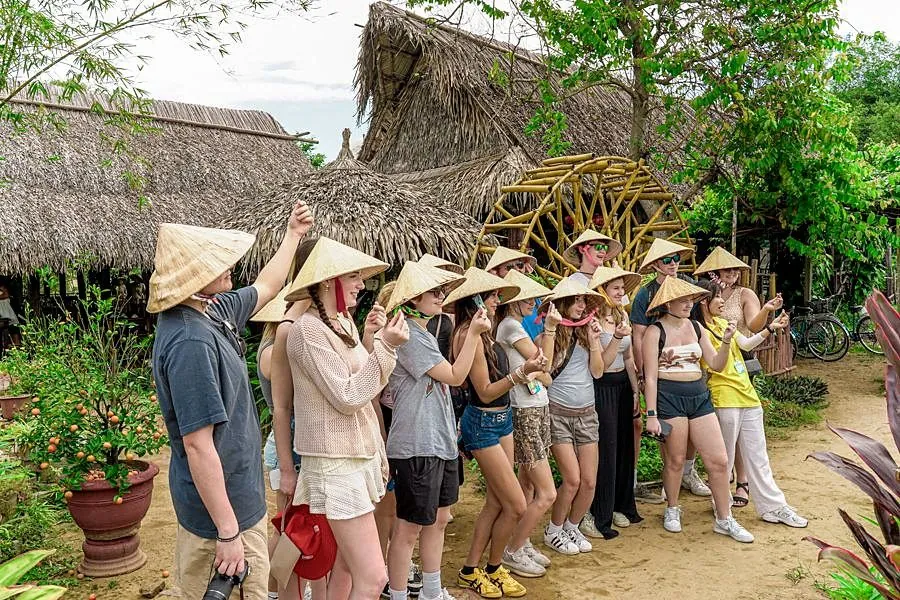
Regional contrast
One of the strongest parts of learning in Vietnam is seeing how landscape, pace, livelihood, and social texture shift across different regions.
We write more about what tends to work — and what tends to fall flat — once programs are actually running in our field notes and resources.
Vietnam is not difficult to access. It is difficult to interpret.
Without structure
Students tend to move quickly, collect impressions, and retain relatively little beyond surface-level exposure.
With structure
The same environments become legible. Students begin to see systems, context, and difference rather than isolated experiences.
Why that matters
This is why program design — pacing, sequencing, reflection, and leadership — matters as much as the destinations themselves.
Built around teacher and faculty leadership
Before the program
We help shape routes, pacing, and learning environments around the academic goals and structure of the group.
On the ground
We manage local coordination so teachers and faculty can focus on students, framing, and educational use of the field.
In practice
The program needs enough structure to hold together well, but enough openness for real places to actually do their work.
If it helps to understand that approach more broadly, you can read more about how we work at Scivi.
If you are specifically planning a university-based model, you can also see our faculty-led programs.
Related field notes
These articles show how Vietnam can work as a field-based learning context across school trips, student engagement, and place-based program design.
How Vietnam destinations become stronger when they are framed as field-learning contexts.
A closer look at student attention, observation, and field learning.
Why program design matters more than simply adding activities.
A place-based example of educational travel beyond surface-level tourism.
Relevant program pathways
These pages connect the broader educational travel frame to specific audiences and program types.
Naming the experience honestly
Educational travel, field learning, and service learning are not the same thing.
Scivi uses these terms carefully. Some programs are educational tours with field elements. Some are faculty-led field programs. Some include service learning or community-based learning when there is enough structure, local partnership, preparation, and reflection to support that label.
Next step
Still deciding which direction fits?
Most groups start by identifying a direction rather than building a full program. If you are still exploring where Vietnam might fit, we can help map the different routes and point you toward the type of program that makes the most sense for your group.
Field presence
How students are asked to be present matters.
For Scivi, a field program is not only a route through Vietnam. It is a way of helping students enter places with attention, restraint, relationship, and care.