
Many short-term business programs rely heavily on company visits because they are concrete, visible and easy to explain in a proposal. A company visit sounds more academic than a general city tour. It gives the itinerary an institutional structure. It also reassures faculty and study abroad offices that students will meet practitioners rather than only observe from the outside.
There is real value in that. Students should hear from people building organizations, managing teams, entering markets, working with partners and responding to local conditions. But a company visit is only one kind of evidence. If the rest of the program does not help students understand the wider environment, the visit can become a polished presentation floating above the place itself.
The weakness of the standalone company visit
Most companies are not designed to teach a course. They may be generous hosts, but they have their own communication habits, sensitivities, commercial priorities and public-facing stories. A presentation may explain the company’s history, growth, products, values or market position. It may not explain what students most need to understand: the constraints, trade-offs, local relationships and operating systems behind the story.
Students may also lack enough context to ask strong questions. If they have not observed the local market, consumer behaviour, labour environment, infrastructure or cultural setting, their questions may remain general. They may ask about growth, competition, funding or challenges, but miss the more specific dynamics that make the visit educationally useful.
This is why company visits work best when they are part of a field sequence. The visit should connect to what students have already seen and what they will examine afterwards. Otherwise it risks becoming a formal stop that sounds impressive but does not change how students understand the business environment.
Doing business means reading context
Doing business in Asia cannot be reduced to etiquette, market size or economic growth. Students need to learn how to read context. That means paying attention to how trust is built, how people use time, how formal and informal systems overlap, how hierarchy appears, how businesses manage ambiguity, and how different actors interpret risk.
In Vietnam, some of this context is visible in daily life. A student can observe how street-level commerce handles speed and adaptation, how cafés use space and identity, how local retailers manage customer relationships, how markets organize supply and price, how logistics connects city and region, and how digital tools enter ordinary business routines without replacing older systems entirely.
These observations are not substitutes for company visits. They make company visits more useful. When students have already seen the local environment, they listen differently. They can ask better questions and compare formal explanations with ground-level evidence.
What students often miss
Students often notice visible difference first: traffic, density, language, food, speed, service style, architecture, heat, noise and movement. Those first impressions are not trivial. They are often the beginning of attention. But if the program stops at impression, students may leave with a descriptive memory rather than an analytical one.
A business field program should help students move from “this place feels different” to more useful questions. How does density shape commerce? How do small businesses manage uncertainty? What does consumer trust look like? How do global brands localize? What does informal work reveal about the economy? Where do digital platforms change behaviour, and where do older routines remain stronger?
The goal is not to turn every observation into a lecture. It is to give students a way to connect small details with larger business questions.
How Vietnam can support doing-business-in-Asia courses
Vietnam can support a doing-business-in-Asia program because it allows students to observe transition at multiple levels. Foreign investment, manufacturing, logistics, urbanization, tourism, digital adoption, food systems, retail growth, social enterprise and informal commerce all sit near one another. A short program can expose students to several layers without requiring them to treat Vietnam as a complete representation of Asia.
That distinction matters. Vietnam should not be presented as “Asia in miniature.” It is a specific country with its own history, political economy, regional differences and business culture. But precisely because it is specific, it can help students move from broad claims about Asia into grounded observation.
For comparative programs, Vietnam can also sit alongside Singapore, Thailand, Malaysia, Indonesia, Japan, South Korea or other contexts. The purpose is not to rank countries, but to help students see how different systems organize business, infrastructure, talent, regulation, consumer behaviour and regional connection.
Designing the field sequence
A stronger program does not simply add more activities. It sequences them more carefully. Students might begin with an urban orientation that treats the city as a business environment. They might then visit a local company or founder, examine markets and consumers, meet a university or industry specialist, and later connect the discussion to supply chains, tourism, sustainability or social enterprise.
The important point is that each encounter should prepare students for the next one. A market walk can sharpen questions for a retail or consumer-brand visit. A logistics context can make a company presentation more concrete. A university roundtable can help students interpret what they have seen in the field. A debrief can prevent the program from becoming a collection of interesting but disconnected moments.
When the sequence works, students do not only remember individual visits. They begin to build a working map of how business operates in the place they are studying.
Questions faculty can ask before building the program
Before choosing company visits, faculty teams can ask several practical questions. What does the course need students to understand by the end? Which parts of the business environment can students observe directly? Which company visits will deepen that understanding rather than simply decorate the itinerary? What context do students need before each visit? Where will comparison and synthesis happen?
They can also ask what kinds of business should be visible. A program focused only on large companies may miss the everyday systems that shape economic life. A program focused only on informal enterprise may miss formal investment, scaling, regulation and regional strategy. The strongest programs often hold both in view.
For Scivi, the local partner’s role is to help translate these questions into a route that is educationally useful and operationally realistic. That means finding the right visits, but also knowing when a visit is not enough, when a city itself should be used as a field site, and when students need more time to process what they are seeing.
Beyond the meeting room
Company visits should not disappear from doing-business-in-Asia programs. They are often essential. But they should not carry the whole learning burden. Students need to step outside the meeting room and learn how to read the context in which business actually happens.
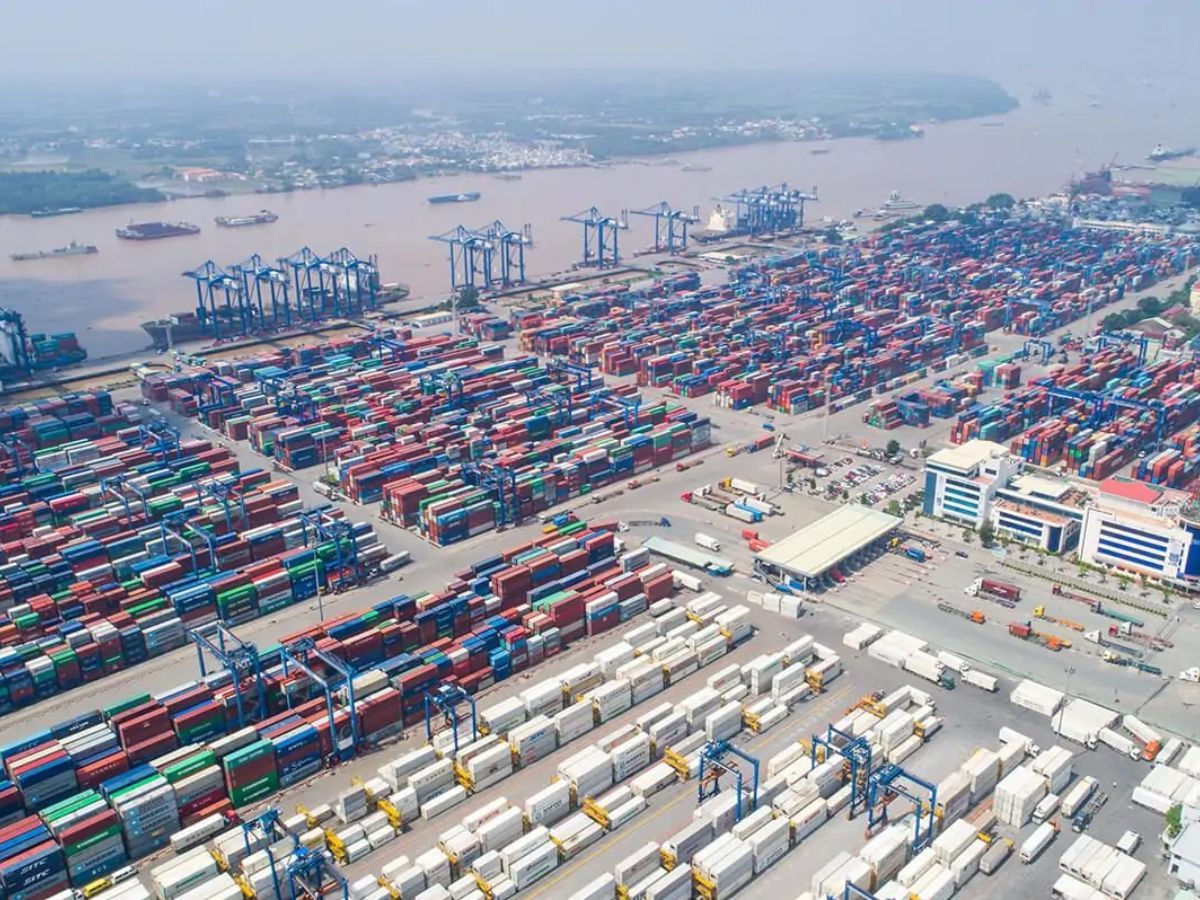
In Vietnam, that context may appear in a port, a market, a café, a family shop, a university lab, a factory corridor, a tourism district, a startup office, a food supply chain, a social enterprise or a crowded street where commerce, movement and adaptation are happening at the same time.
The educational value comes from connecting those settings. Doing business in Asia becomes more teachable when students can move between formal explanation and field observation, then ask what each reveals about the other.