
The program was organised around repeated participation in a house-building project in the Mekong Delta. Students returned to the same site over several days, worked alongside local builders and met the family and community connected to the project. The wider itinerary provided context, but the sustained work remained the centre of the program.
Making community engagement more than a short volunteer stop.
A brief activity is easy to add to an itinerary and easy to photograph. A stronger program needs a locally defined need, local leadership, enough time for students to encounter the pace of real work and honest limits on what a visiting group contributes.
The site also had to remain safe and appropriate for students without turning the experience into a staged simulation.
Continuity was more important than spectacle.
Repeated return
Students came back to the same site and could see gradual progress over several days.
Local work leadership
Local builders determined what could be done usefully and safely.
Community context
Family interaction, school visits and past projects placed the work in a wider local setting.
Realistic pacing
Work periods, heat, travel, meals and recovery were treated as part of the program design.
Modest claims
The program focused on participation, responsibility and learning rather than claiming measurable development impact.
Structured closure
Students saw the progress made, said goodbye and reflected on work that continued beyond their visit.
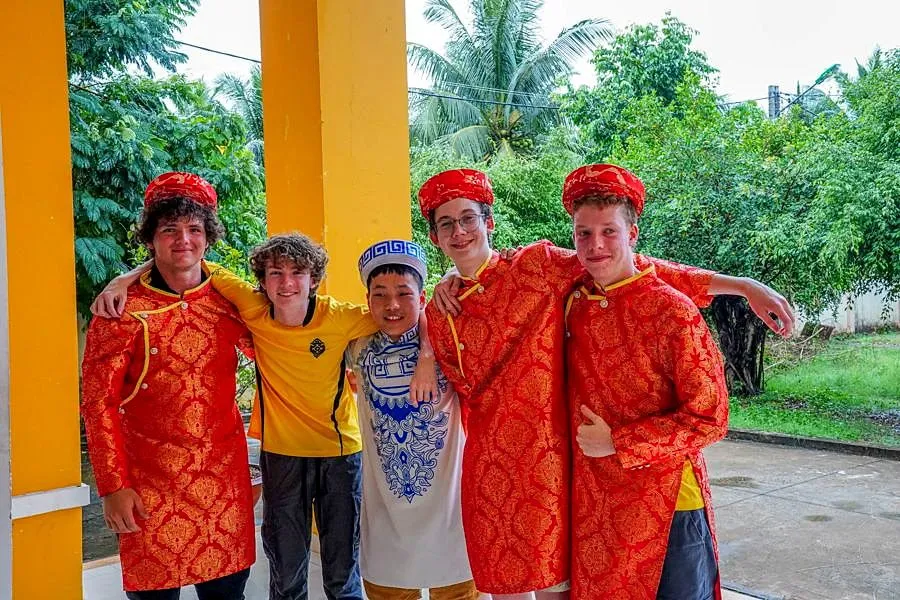
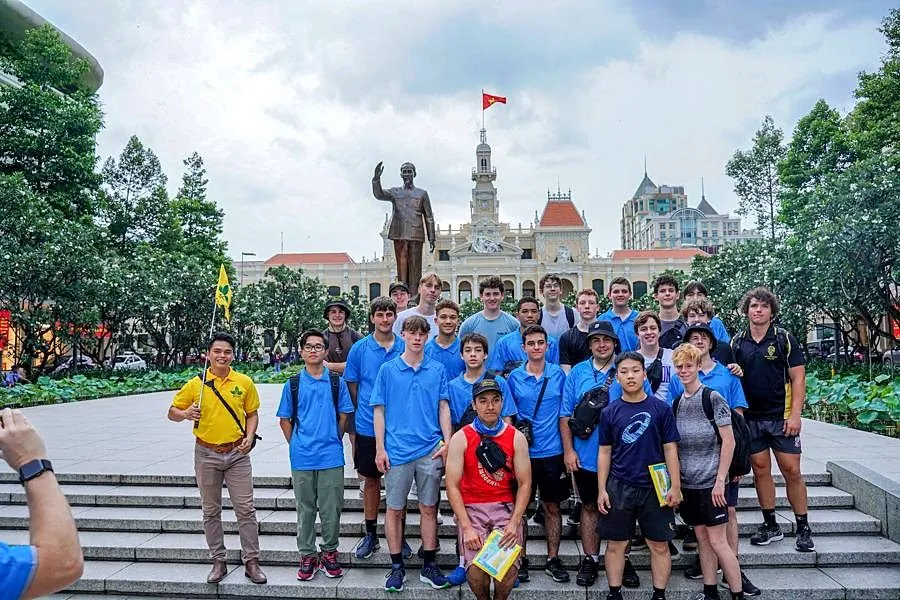
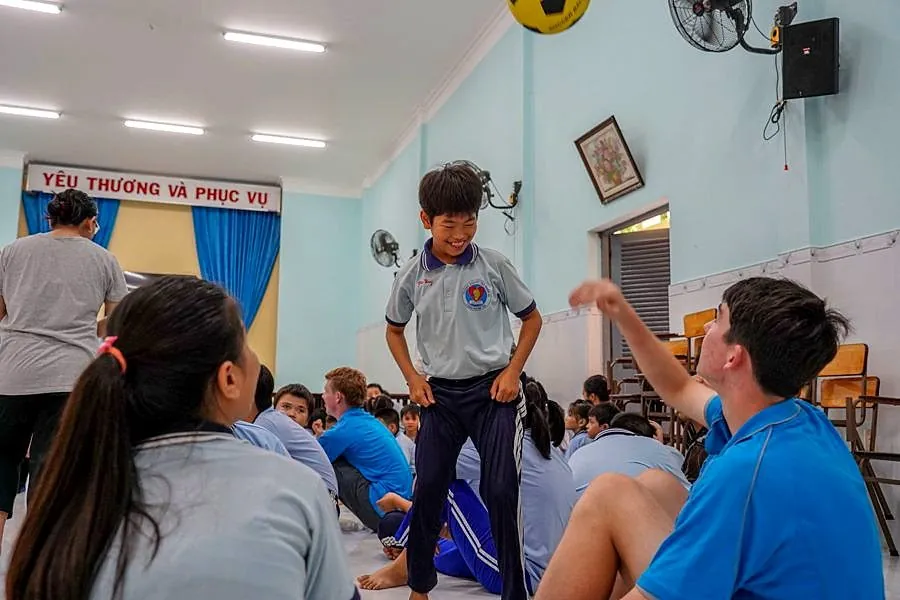
Progress was gradual, shared and not fully under student control.
Students encountered repetitive work, coordination, fatigue and small visible gains. This gave teachers a concrete basis for discussing contribution and responsibility.
The school remained responsible for connecting the experience to its educational goals and for managing student behaviour and interpretation.
What supports another cohort.
Partner protocol
How needs are defined, roles agreed and expectations communicated before the group arrives.
Site knowledge
What work, equipment, supervision, transport and pacing are appropriate for a school group.
Continuity record
What happened previously, what the local partner needs next and what should not be repeated.
Start with the student age, time available and local purpose.
Scivi can first assess whether a sustained model is realistic and appropriate before a project is presented to the school.