
The cohort arrived with prepared research themes. Teams examined questions connected to ethnic-minority livelihoods, women’s roles, tourism, trafficking, education and community development. Faculty retained academic direction; Scivi coordinated the shared field conditions within which the teams could work.
Different questions, one finite field environment.
A large cohort divided into several teams needs different contacts and settings, but transport, timing, participant accounting, faculty oversight and local relationships still have to operate as one program.
The field also cannot be treated as an unlimited source of interviews. Access has to remain respectful, and teams need alternatives when an early assumption does not hold up.
A common operating base with room for different inquiries.
Preparation before arrival
Teams entered with working questions so limited field time could be used for testing and revision.
Shared orientation
The whole cohort received common guidance on place, movement, expectations and field boundaries.
Parallel access
Local contacts and settings were coordinated around different themes without overscheduling every hour.
Common check-ins
Transport, meeting points and synthesis periods kept the program coherent.
Flexible inquiry
Teams could revise questions when interviews or observation challenged their assumptions.
Hanoi connection
Selected themes could be placed in a wider urban or national context after Sapa.
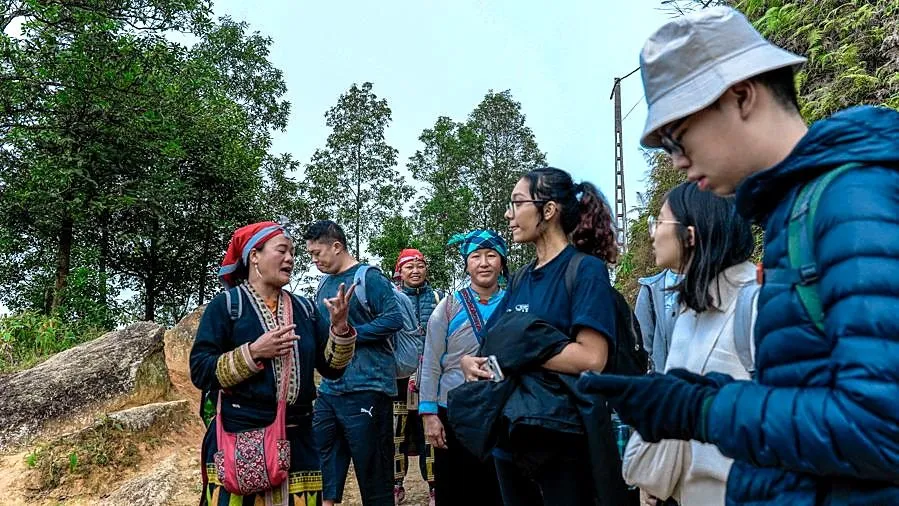


The field helped students test prepared questions.
The program did not claim to turn a short visit into comprehensive research. Its purpose was narrower: students used direct observation and conversation to test, complicate or reframe work prepared beforehand.
Faculty remained responsible for research design, ethics, assessment and discipline-specific interpretation. Scivi made the local work feasible and kept operational complexity from consuming the available field time.
What supports another cohort.
Access knowledge
Which contacts and settings can support particular themes, and how much lead time they require.
Movement logic
Where parallel teams can operate realistically and where transport or terrain makes the structure too fragile.
Role clarity
What faculty must prepare academically and what the local operator can coordinate responsibly.
Start with the discipline, cohort and research format.
Scivi can first assess whether the proposed local structure is realistic before detailed access is promised.