Exploring Educational Adventures:
School Trips in Laos
Laos doesn’t immediately position itself as an obvious destination for school trips. It is quieter, less developed, and lacks the immediate familiarity of other parts of Asia. That hesitation is real — and often justified.
But it is also where the value starts.
Compared to more established destinations, Laos operates with fewer layers of mediation. Systems are less optimized, less curated, and in many cases, still visibly in transition. For students, this changes the nature of the experience. Instead of moving through a program that has already been interpreted for them, they are placed in environments that require closer observation, adjustment, and independent sense-making.
What Laos offers is not convenience. It offers exposure to systems that have not been fully smoothed out — and that difference becomes the core of the learning.
- Luang Prabang: A UNESCO World Heritage Site
Luang Prabang is often introduced through its UNESCO designation, but for students, the value lies in how multiple systems coexist within a relatively small space. Religious life, tourism, and local daily routines operate alongside each other, sometimes in alignment, sometimes in tension.
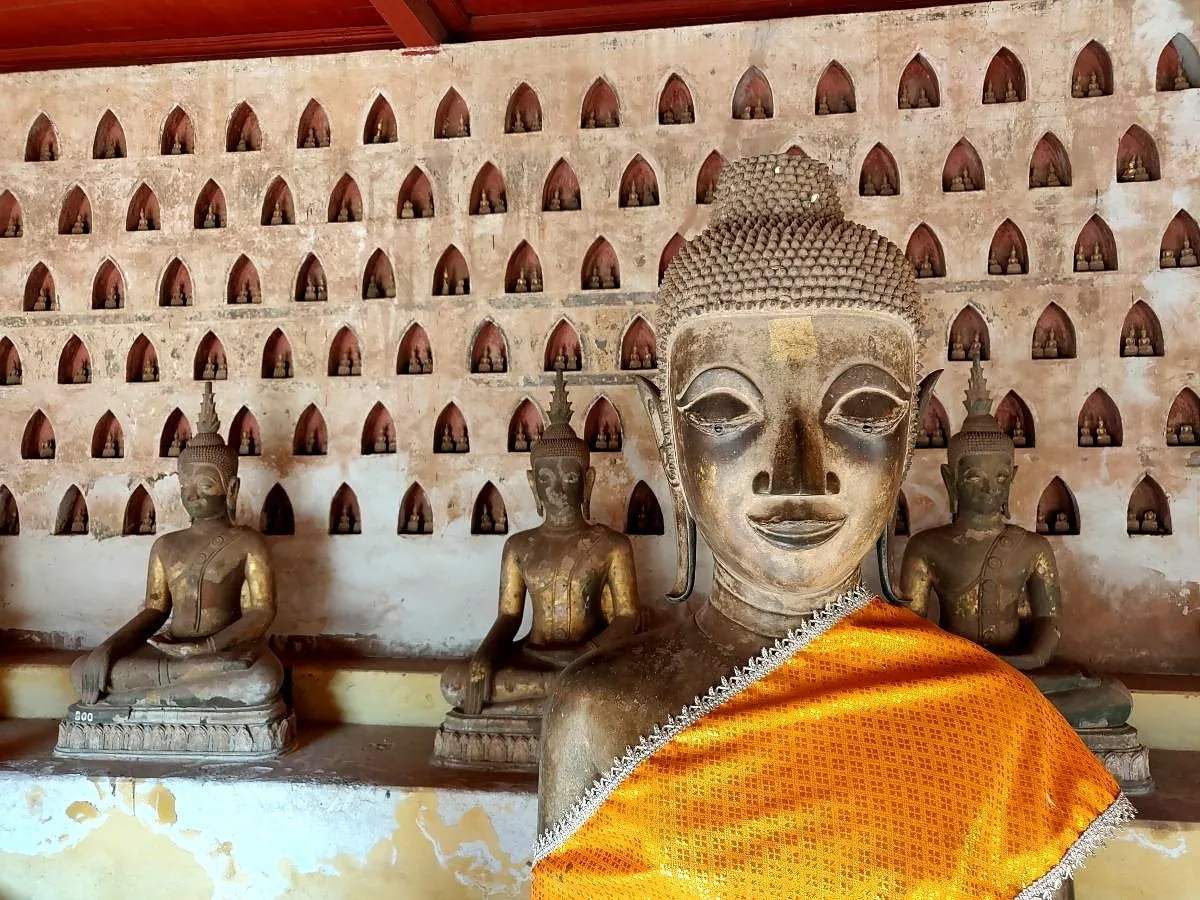
Temple visits such as Wat Xieng Thong or Wat Mai are not simply cultural stops. They provide an entry point into Buddhism as a lived structure, where rituals are ongoing rather than staged. The alms giving ceremony, frequently photographed, becomes more complex when students begin to notice the presence of visitors within what remains a functioning practice.
Institutions like the Traditional Arts and Ethnology Centre introduce Laos’ ethnic diversity, but they also raise questions around representation and interpretation. Who is shaping these narratives, and how are they being presented? When combined with homestays or community-based visits, students move from observation into interaction, where understanding is shaped through direct engagement rather than explanation.
- Vientiane: The Capital of Laos
Vientiane offers a different layer of the country. It is less visually striking, but more revealing in how a capital operates under constraints.
Landmarks such as Patuxai and Pha That Luang provide national symbols, but the more critical site is often the COPE Visitor Centre. Here, the legacy of unexploded ordnance is not presented as distant history, but as an ongoing condition affecting land use, movement, and safety in parts of the country.
Cultural workshops, whether in weaving or music, are most effective when understood as economic activities rather than isolated traditions. The question shifts from “what is this?” to “how is this sustained?” — and how these practices adapt within broader economic pressures.
- Kuang Si Waterfall and Environmental Context
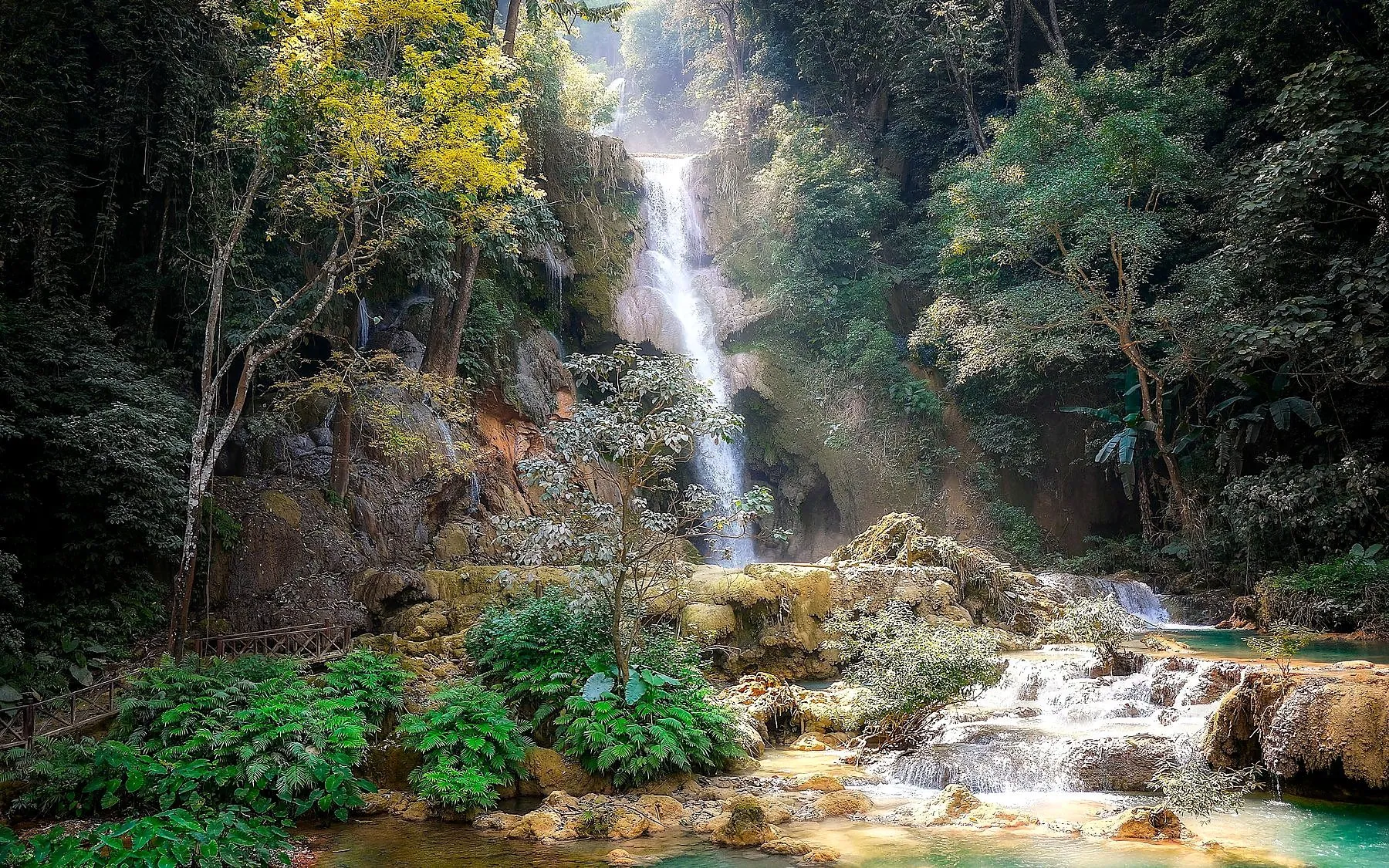
Kuang Si Waterfall is typically approached as a natural highlight, but it can also be read as a managed environment. The site is carefully maintained, which reflects a set of decisions around conservation, tourism, and access.
For students, this creates an opportunity to examine how natural spaces are shaped. What appears untouched is often the result of ongoing intervention. The surrounding ecosystem exists within a wider context of development, where preservation and usage are continuously negotiated.
- Bolaven Plateau: Coffee and Regional Economies
The Bolaven Plateau introduces a system that extends beyond Laos itself. Coffee production here is tied to global markets, external demand, and pricing structures that are not controlled locally.
Farm visits allow students to follow the production process, but the more important layer sits in the relationships behind it — between producers, intermediaries, and international buyers. This is where abstract discussions about development begin to take form, grounded in how a single product moves through a wider system.
- The Plain of Jars: Historical Gaps and Interpretation
The Plain of Jars presents a different type of learning environment — one defined by incomplete understanding. The physical evidence is extensive, but its origins remain uncertain.
For students, this shifts the role of history. Instead of receiving established conclusions, they are working within ambiguity, comparing interpretations, and recognizing the limits of available knowledge. The site becomes less about answers and more about how explanations are constructed.
Taken together, Laos does not offer a single, coherent narrative for school trips. It offers something more demanding.
Across different sites, students encounter systems that are still in motion — not fully resolved, not fully explained, and not fully adapted for external audiences. There are fewer simplified entry points and fewer ready-made interpretations.
The result is not a program built around coverage, but one built around response. Students are required to observe more carefully, question initial assumptions, and navigate situations where meaning is not immediately clear.
That condition — where clarity is limited and interpretation is necessary — is difficult to replicate in more structured environments. It is also where the learning tends to hold.